
Disclosure: TopAINest is reader-supported. This post contains affiliate links, and we may earn a small commission if you buy through them — at no extra cost to you. We only recommend products we’d genuinely tell a friend to buy.
Farming has always been hard — too much rain, not enough rain, pests at the wrong time, markets that shift overnight. In 2026, AI is becoming the farmer’s most powerful tool for dealing with all of it. The change isn’t coming; it’s already here, and it’s accelerating fast.
What “AI in Agriculture” Actually Means
People throw the phrase around loosely. In practice, AI in agriculture means a few distinct things happening simultaneously:
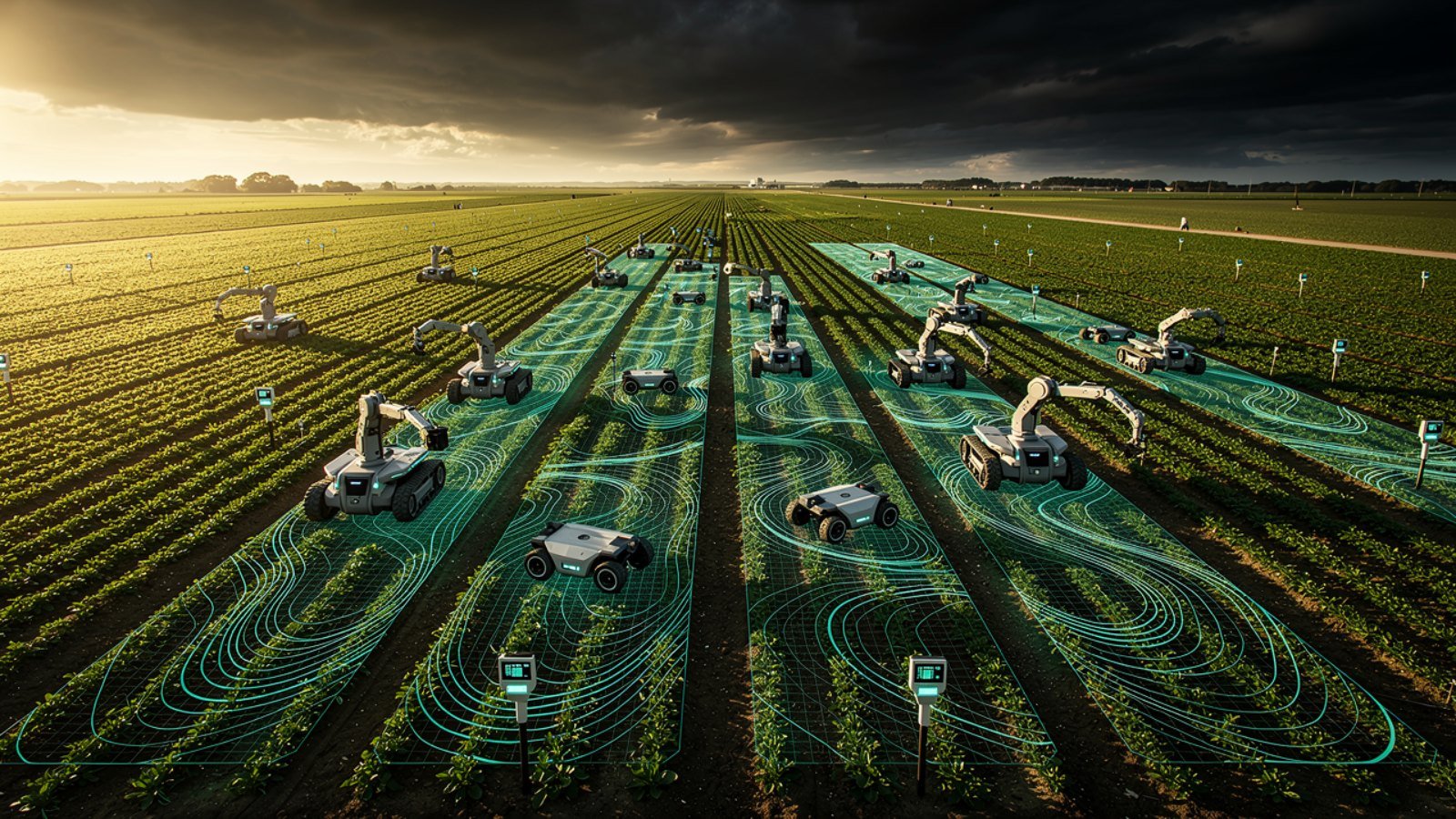
- Precision crop monitoring — satellites and drones capture multispectral images of fields, and AI identifies exactly which zones are stressed, nutrient-deficient, or infected before the human eye can see it.
- Predictive analytics — machine learning models trained on decades of weather, soil, and yield data help farmers decide when to plant, irrigate, and harvest for maximum output.
- Autonomous machinery — AI-guided tractors, sprayers, and harvesters operate with GPS precision, reducing waste and labour costs.
- IoT soil and climate sensors — networks of connected sensors feed real-time data into AI platforms that adjust irrigation and fertilisation on the fly.
- Supply chain optimization — AI predicts commodity prices and logistical disruptions, helping farmers and agribusinesses make better market decisions.
5 Ways AI Is Changing Farms Right Now
1. Drone-Based Crop Scouting
Agricultural drones equipped with multispectral cameras fly over fields and generate detailed health maps in minutes — what used to take days of manual walking. Companies like DJI Agriculture, Agras, and Sentera offer platforms that turn drone imagery into actionable AI insights: exactly where the aphid pressure is, which irrigation zone is showing drought stress, or which rows need foliar treatment. A 1,000-acre farm can be fully scouted in a single morning.
2. AI-Powered Irrigation Systems
Traditional irrigation runs on schedules. AI irrigation responds to reality. Soil moisture sensors feed data into platforms like Lindsay Irrigation’s FieldNET Advisor or Netafim’s AgriForce, which adjust watering in real time based on actual field conditions and weather forecast data. Studies consistently show 20–40% water savings without yield loss — a massive deal as water scarcity becomes a global agricultural crisis.
📦 Want to experiment at home or in a greenhouse? The Arduino soil moisture sensor kit on Amazon Canada is a great intro to the technology farmers are scaling up — program your own automated irrigation logic.
3. Predictive Disease and Pest Detection
AI models trained on millions of images can now identify over 50 crop diseases and 200+ pest species from a smartphone photo. Apps like Plantix and platform tools from Bayer’s Climate FieldView let farmers get an instant diagnosis and treatment recommendation in the field. The economic impact is significant — late-stage crop disease can wipe out 20–40% of a harvest; early detection can cut those losses to under 5%.
4. Autonomous Tractors and Field Robots
John Deere’s autonomous tractor (the 8R) can till, plant, and spray fields with centimetre-level GPS accuracy — with no driver. The farmer monitors it from a phone. Smaller operations are seeing solutions like the Small Robot Company’s “Tom, Dick, and Harry” trio (mapping, micro-dosing, weeding robots for smaller farms). In specialty crops — strawberries, lettuce, asparagus — harvesting robots from companies like Harvest CROO and Tortuga AgTech are entering commercial deployment.
5. AI-Driven Yield Forecasting
Governments and commodity traders have used satellite yield forecasting for years; in 2026, it’s available to individual farmers. Platforms like Gro Intelligence, Taranis, and BASF’s Maglis combine satellite imagery, weather models, and local field data to forecast yields months in advance. That means better marketing decisions, better input purchasing, and better crop insurance planning.
The Challenges AI Still Can’t Solve
This isn’t all smooth progress. Real barriers remain:
- Rural connectivity — AI systems need internet. Much of the world’s farmland doesn’t have reliable 4G, let alone 5G. Satellite internet (Starlink) is helping, but it’s not everywhere yet.
- Cost of entry — Autonomous tractors and precision ag platforms are expensive. Small and medium farms (which feed most of the developing world) often can’t afford them without subsidy programs.
- Data ownership — Who owns the yield and soil data that farmers generate? This is a live legal and ethical debate, with large agtech companies and independent farmers on opposite sides.
- Adoption curve — Generational farming knowledge and trust in technology take time to build. The average farmer in Canada is 55 years old.
Tools and Books to Go Deeper
📘 Precision Agriculture Technology for Crop Farming — a practical reference covering GPS, remote sensing, and AI-driven decision support for farmers and agtech students.
📦 Raspberry Pi IoT Sensor Starter Kit — build your own smart monitoring system; a hands-on way to understand the IoT stack behind precision agriculture platforms.
FAQ
How is AI used in agriculture today?
AI is used for crop disease detection, precision irrigation, autonomous machinery, drone-based field scouting, and yield forecasting. These applications are active in commercial farms across North America, Europe, and Australia right now.
Does AI farming help small farms?
It can, but access is uneven. Entry-level tools like smartphone crop diagnostic apps are accessible to anyone. Full autonomous machinery and enterprise platforms are still cost-prohibitive for most small operations without government support or cooperative purchasing models.
Will AI replace farmers?
No — not in the foreseeable future. AI automates specific tasks (field scouting, irrigation decisions, machine guidance) but farming requires judgment, problem-solving, and adaptability that AI systems can support but not replace. The farmer’s role is evolving from physical labour to data-driven management.
The Bottom Line
AI isn’t replacing farmers. It’s giving them superpowers — seeing their fields at a resolution no human eye can match, predicting problems before they become disasters, and automating the parts of the job that are repetitive and exhausting. The farms that adopt these tools in the next five years will have a significant competitive advantage over those that don’t.
And for the rest of us? AI-optimised agriculture means more food, less waste, lower prices, and a better shot at feeding 10 billion people sustainably. That’s not a small thing.




Leave a Reply