

Disclosure: TopAINest is reader-supported. This post contains affiliate links, and we may earn a small commission if you buy through them — at no extra cost to you. We only recommend products we’d genuinely tell a friend to buy.
AGI. It is one of the most talked-about acronyms in technology right now, and also one of the most misunderstood. Depending on who you ask, we are anywhere from two years away to several decades away — or the concept itself is incoherent and we will never arrive at all. So what is artificial general intelligence, and how close are we really in 2026?
The short answer is that nobody knows for certain — but the honest longer answer is that the distance has shrunk faster than almost anyone predicted five years ago. The conversation has moved from “someday, maybe” to “probably this decade,” and that shift deserves a clear-eyed explanation.
This guide breaks it all down in plain English: what AGI means, how today’s AI compares, what the benchmarks are, what researchers actually think, and why it matters for the rest of us.
Table of Contents
What Exactly Is AGI — and How Is It Different from Today’s AI?
AGI stands for artificial general intelligence. The “general” part is what makes it distinct from the AI you already use every day. Today’s AI systems — ChatGPT, Claude, Gemini, Midjourney — are what researchers call narrow AI. They are extraordinarily good at specific tasks: writing, image generation, code, translation. But they cannot generalise the way a human can. A chess-playing AI cannot drive a car. A language model cannot wake up, decide it wants to learn to play piano, and figure out how to do it without being explicitly trained on piano instruction data.
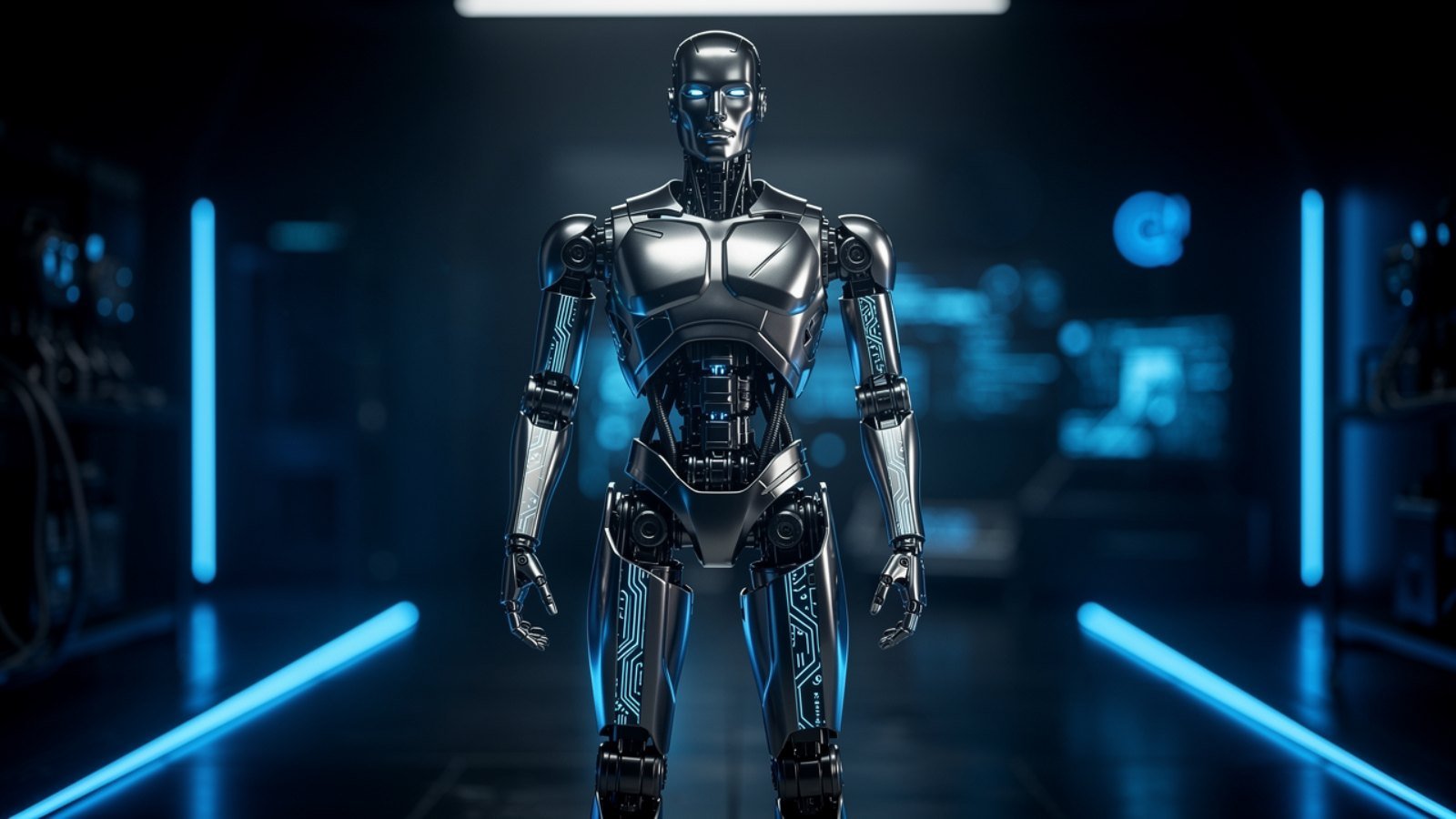
AGI would be an AI system that can learn and perform any intellectual task that a human can. Not just match human performance on pre-defined tests, but transfer knowledge flexibly from one domain to another, set its own goals, and adapt to genuinely new situations without retraining. Some researchers add a further threshold: not just matching humans but eventually surpassing them in essentially every cognitive domain. That upper end is usually called ASI — artificial superintelligence — and it is a separate (and scarier) conversation. If you want to go deeper on that, our guide What Is Superintelligence? The 2026 Guide is a good next read.
Where AI Actually Stands in 2026
By mid-2026 the frontier models — the top-tier systems from OpenAI, Anthropic, Google DeepMind, Meta AI, and a handful of leading labs — are genuinely astonishing. They pass bar exams, write production-quality code, conduct multi-step research, generate convincing video from text, and hold long-form conversations that are nearly indistinguishable from a human expert’s. They score in the top percentiles on the SAT, LSAT, GRE, and many medical board exams.
And yet, most researchers still do not call this AGI. Here is why: these systems fail in predictable ways. They hallucinate facts with uncomfortable confidence. They cannot reliably plan across very long horizons without human checkpoints. They struggle with tasks that require genuine physical-world intuition. And perhaps most revealing — they still need enormous amounts of curated training data for each new capability. A toddler can learn “hot = don’t touch” in one painful second; a frontier model needs millions of training examples to learn a comparable generalisation.
That said, 2025 and early 2026 brought a step-change. Reasoning models demonstrated markedly better performance on novel problems — problems that weren’t in their training data. Agentic systems that can browse the web, write and run code, and iterate on results autonomously have moved from lab demos to production deployment. The gap between narrow and general is narrowing faster than the 2020 consensus expected.
The Benchmarks That Matter — How Do We Know When We’ve Reached AGI?
This is where things get philosophically messy. There is no single universally agreed test for AGI. The original Turing Test — can a machine fool a human into thinking it is also human in text conversation — was arguably passed by the best models as early as 2023. But the AI research community largely agreed that the Turing Test had been set too low. A very convincing autocomplete engine can pass it.
More sophisticated benchmarks have emerged. ARC-AGI, developed by François Chollet, tests for fluid intelligence: can the model solve visual pattern problems it has never seen? Frontier models have dramatically improved on ARC-AGI over the last two years, with some systems achieving over 80% — compared to near-zero just a few years earlier. SWE-bench measures real software engineering: can the model fix actual GitHub issues? Performance there has gone from around 3% in 2023 to over 50% by some evaluations in 2026.
The problem is that each benchmark eventually gets saturated — models are trained toward it and performance stops being a clean signal. Several labs have proposed internal goalposts instead: can the model autonomously perform a month of work by a skilled knowledge worker? Can it conduct independent scientific research and publish a valid paper? These “economic value” definitions of AGI are increasingly popular because they sidestep philosophical debates and focus on something measurable.
What the Experts Are Saying (and Why They Disagree)
A 2023 survey of ML researchers put median AGI arrival at 2059. By 2025, follow-up surveys showed the median had pulled in dramatically — some prominent researchers publicly moved their estimates to the early 2030s or even late 2020s. Dario Amodei, Anthropic’s CEO, suggested in a 2025 interview that “powerful AI” capable of doing the work of a Nobel-laureate scientist could arrive within two to three years. Sam Altman has spoken of AGI in similar near-term terms. Meanwhile Yann LeCun, Meta’s chief AI scientist, has argued consistently that current deep-learning architectures cannot reach AGI and that the whole field needs a fundamental rethink.
The honest reality is that “AGI” means slightly different things to different researchers, and that definitional fuzziness explains much of the disagreement. If AGI means “can do most economically valuable knowledge work autonomously,” the optimists may be right that it is close. If AGI means “can match or exceed human cognitive flexibility across every domain including embodied physical tasks,” the pessimists have a stronger case. Both views are being held in good faith by smart people — which is itself a useful data point about how genuinely hard the question is.
The Risks and Why This Matters to Everyone
The stakes of getting AGI wrong are unusually high, which is why safety research has grown into a serious academic and industrial field. The concern is not science-fiction robot uprisings — it is more subtle. An AI system optimising aggressively for a goal, even a goal that sounds reasonable, could cause enormous harm if the goal is even slightly misspecified. Getting the “alignment” right — making sure AGI actually pursues what humans want, not a distorted proxy — is the central technical problem that researchers have spent careers on.
On a more immediate level, AGI-adjacent systems are already reshaping the job market. Roles in writing, coding, data analysis, customer service, and basic legal and medical research are being partially automated right now, in 2026. The long-term labour market implications of genuine AGI — a system that could, in principle, outperform a human in any cognitive role — are the kind of civilisation-scale question that governments, economists, and ordinary people are only beginning to grapple with seriously.
None of this means AGI is inevitable or imminent. It means that the question deserves your attention, even if you are not a tech person — because the answer will affect everyone’s life, probably within this generation.
Further Reading
If you want to go deeper on AGI, these books are among the best-regarded on the subject.
Human Compatible: Artificial Intelligence and the Problem of Control by Stuart Russell — the clearest technical and philosophical case for why alignment matters and how researchers are approaching it. Accessible and essential. See on Amazon → (~$20)
The Alignment Problem by Brian Christian — a deeply reported account of the people working to make AI systems do what we actually want them to do. Gripping even for non-technical readers. See on Amazon → (~$22)
The Coming Wave by Mustafa Suleyman — written by one of the co-founders of DeepMind, this is a frank insider’s take on the speed of AI progress and what society needs to do about it. Urgent and well-argued. See on Amazon → (~$25)
Frequently Asked Questions
Is ChatGPT or Claude AGI?
No — not by the definitions most researchers use. These are extraordinarily capable narrow AI systems. They excel at language tasks but cannot generalise flexibly to completely new problem types the way a human can, cannot set their own long-term goals, and require massive retraining to acquire genuinely new capabilities. Impressive, but not AGI.
When will AGI actually arrive?
Estimates range from “the late 2020s” (the most optimistic researchers) to “never with current approaches” (the most sceptical). A rough centre of gravity among researchers in 2026 seems to be somewhere in the 2030s — but this is genuinely uncertain, and the estimates have been moving closer over the last few years. For context on what comes after AGI, our guide on superintelligence explores that.
Should I be worried about AGI?
Cautiously yes — not in a panic-movie way, but in a “pay attention and participate in the conversation” way. The labour market effects of AI are already real and AGI would accelerate them enormously. The alignment problem is a genuine technical challenge. The decisions being made right now by labs, governments, and international bodies will shape what AGI looks like when it arrives. Staying informed is the most practical first step.
The Bottom Line
AGI is not a done deal or a distant fantasy — it is an active engineering and scientific challenge that the world’s best-resourced labs are working on right now, with timelines measured in years or low decades rather than generations. The AI systems of 2026 are the most capable ever built and are visibly closing the gap with general-purpose human cognition on task after task. Whether that trajectory continues, accelerates, or hits a fundamental wall is genuinely unknown.
What is certain is that the question matters — for your career, for the economy, for global stability. Knowing what AGI actually means, as opposed to the science-fiction version, is a good place to start.



Leave a Reply